


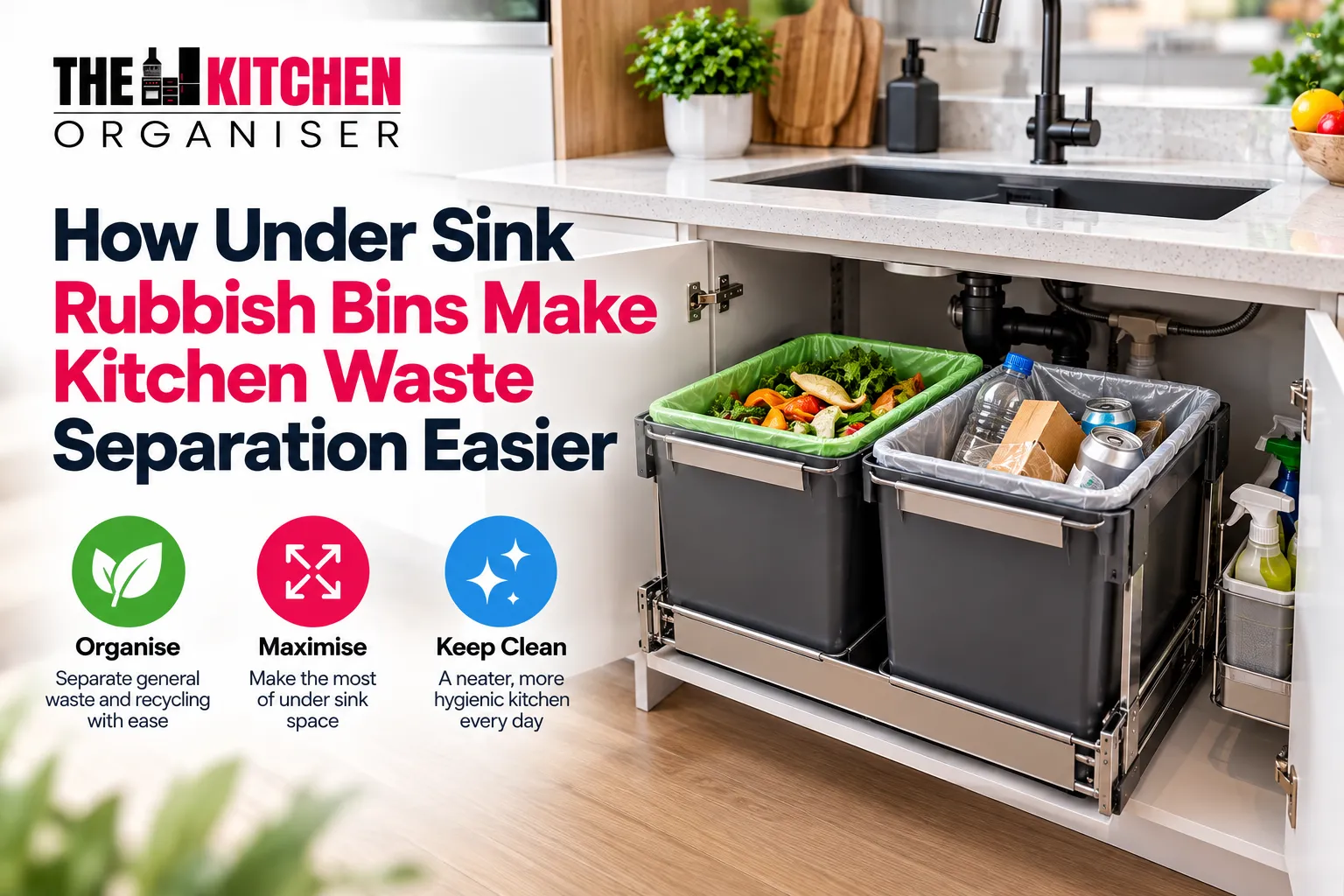
The cupboard under the kitchen sink is usually a jumble of pipes, half-empty spray bottles and a bin that’s slightly too big for the space. Yet it’s the most natural place for rubbish, right beside where you rinse plates and peel vegetables. A well-chosen under sink bin turns that awkward cupboard into a tidy waste station, and under sink rubbish bins with two or three buckets make sorting general waste, recycling and food scraps almost automatic. Here’s how to pick a kitchen under sink bin that fits around your plumbing and suits your household.
Types of Under Sink Bins
Under sink bins come in a few distinct styles, and the right one depends mainly on how much room your plumbing leaves.
|
Type |
How it works |
Best for |
|
Fixed bin |
Sits on the cupboard floor |
Simple setups and tight budgets |
|
Door-mounted bin |
Fixes inside the door and swings out with it |
Cupboards crowded with pipes |
|
Pull-out bin |
Slides forward on runners |
Everyday convenience and heavier loads |
|
Double bin |
Two buckets in one frame |
Separating rubbish and recycling |
|
Triple bin |
Three buckets in one frame |
Households with food scrap collection |
For most homes a double system is the sweet spot: general waste in one bucket, recycling in the other. Just remember that total capacity can be misleading. A 30-litre double holds two 15-litre buckets, so if general rubbish piles up quickly, look for a design with a larger general-waste bucket.
Measure Around the Plumbing Before You Buy
Choosing a kitchen under sink bin that actually fits starts with a tape measure, not a product page. Measure the internal width, depth and height of the cupboard, then note exactly where the trap, waste pipe and taps sit. Sink bowls can hang surprisingly low, which cuts into usable height.
Also check:
-
Dishwasher, water filter or hot water connections.
-
Hinge position and how far the door opens.
-
Clearance for the bin to slide out fully without hitting pipes.
-
Access to the isolation (shut-off) valves, which must stay reachable.
A 450 mm cabinet won’t give you 450 mm of clear space once the side panels are counted, so compare your measurements with the internal cabinet size each product lists. If the pipes leave only a narrow gap, a door-mounted or compact single bin may suit you better than a large pull-out.
Choose the Right Capacity and Keep It Clean
The right capacity depends on how often you cook and how often your council collects. As a rough guide:
-
One person or a couple: a compact single or small double.
-
Small family: a medium double.
-
Larger family or keen cooks: a higher-capacity double, or a triple if your council collects food organics.
Comparing under sink rubbish bins by bucket size, not just total litres, saves you emptying one bucket every single day.
Hygiene matters more here than anywhere else in the kitchen, because the cupboard is enclosed and sits right below the water supply. Choose removable buckets with smooth inner surfaces, use liners, wipe spills off the runners and let washed buckets dry before refitting them. While you’re down there, glance at the pipes for drips. A small leak caught early saves a swollen cabinet floor later.
Why Choose The Kitchen Organiser?
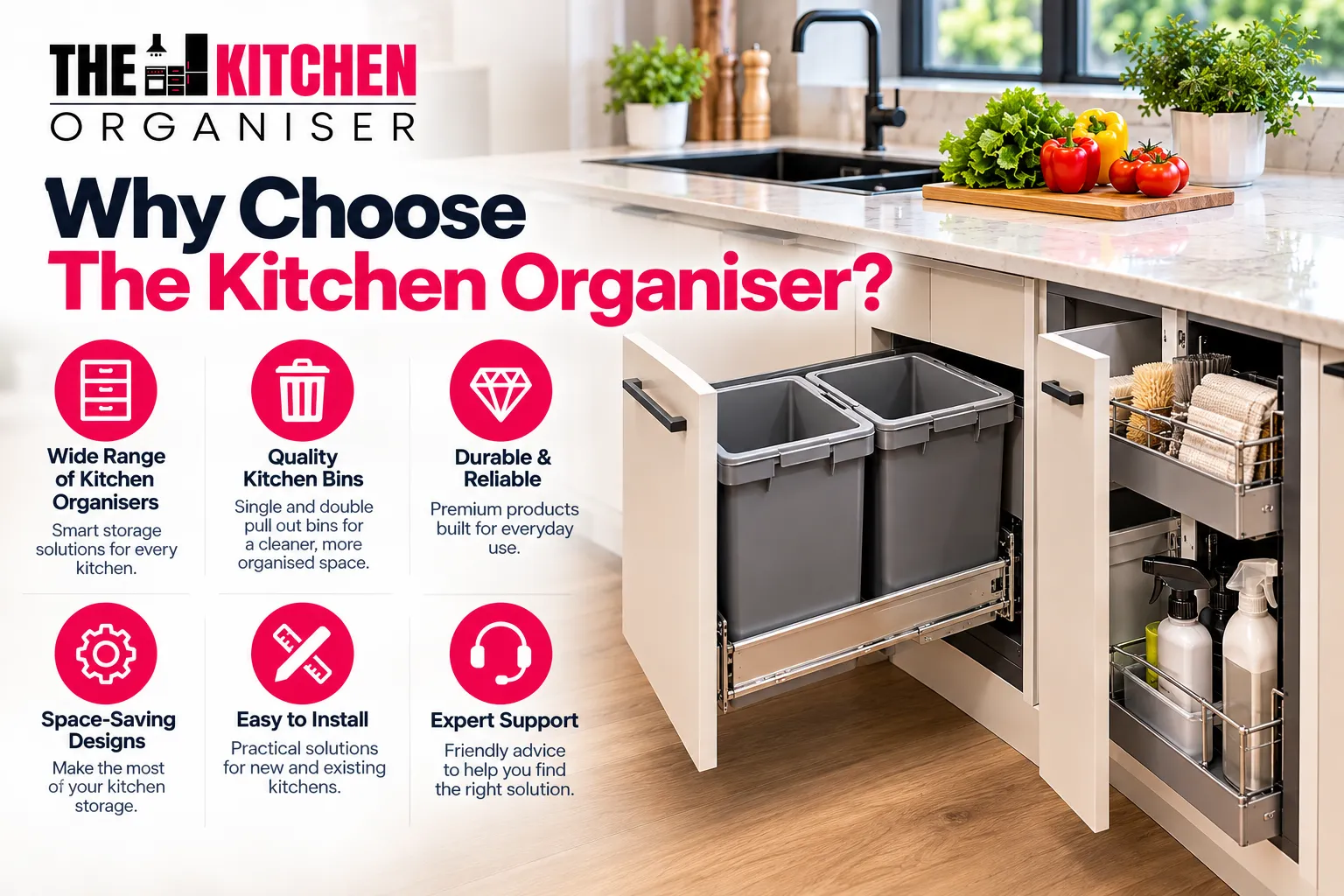
The Kitchen Organiser focuses on storage and waste systems built for Australian kitchens, including plenty of options that work around under-sink plumbing.
-
Single, double and door-mounted bins from brands including Wesco and Kia Ora.
-
Compact and full-size options, from 19-litre singles to 60-litre-plus doubles.
-
Replacement buckets and lids, so a cracked bucket doesn’t mean replacing the whole unit.
-
Free shipping Australia-wide on orders over $200.
About Us
The Kitchen Organiser is an online store for Australian homes that want kitchens which are easier to live with. We bring together kitchen bins, drawer and pantry organisers, corner fittings and laundry storage from brands known for quality. Our focus is helping you find products that fit the space you actually have, so your kitchen stays tidy long after installation day.
Frequently Asked Questions About Under Sink Bins
Can you put a bin under the sink?
Yes, most kitchen sink cupboards can hold a bin. The key is fitting it around the plumbing: measure the internal width, depth and height, and note where the trap and pipes sit. Door-mounted and compact pull-out bins suit tight cupboards, while larger double bins work where there’s clear floor space beside the pipes.
What is the disposal under the sink called?
A device fitted to the sink drain that grinds up food scraps is called a food waste disposer, also known as a garbage disposal or waste disposal unit. It’s different from an under-sink bin, which is simply a rubbish container kept in the cupboard beneath the sink until it’s emptied.
What should be stored under the sink?
The best things to store under the sink are a rubbish and recycling bin, dishwashing supplies, sponges and cleaning products. Keep chemicals in their original containers, fit a child safety latch if young children live in the home, and keep the pipes and isolation valves easy to reach. Avoid storing food or anything a leak could damage.
What are some good garbage bins for under the sink?
Good under-sink bins include the Kia Ora OPTIO range, from a 19-litre single to 34-litre and larger doubles, Wesco double pull out bins, and door-mounted models for cupboards crowded with pipes. Choose a design with removable buckets, smooth runners and a size that clears your plumbing. Double bins are ideal if you separate rubbish and recycling.
Final Thoughts
An under sink bin makes use of space most kitchens waste and puts rubbish exactly where you need it. Measure around the plumbing, size each bucket to your household and choose a style that suits your cupboard. Get those three things right and sorting waste becomes part of the routine rather than another chore.