


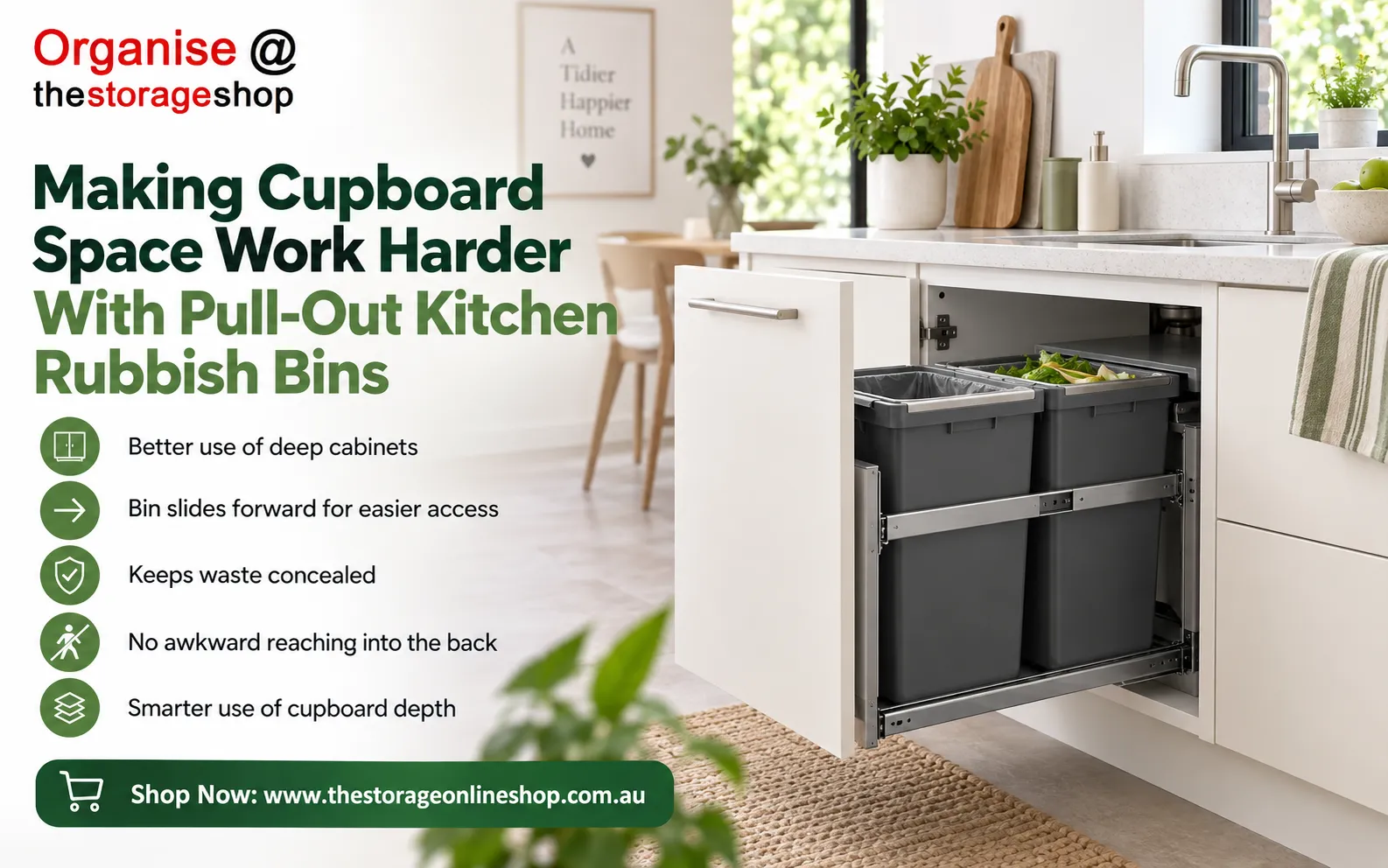
Kitchen cabinetry is valuable real estate. Pots, pans, food supplies, appliances and cleaning products all compete for room, so dedicating an entire area to rubbish needs to be considered carefully.
A cupboard bin can keep waste concealed, but the arrangement becomes even more useful when the container is easy to access. Pull-out systems address this by allowing the waste container to move toward the user instead of remaining deep inside the cabinet.
Why Hidden Waste Storage Appeals to Homeowners
A visible rubbish container can interrupt the visual flow of a kitchen. This can be particularly noticeable in open-plan homes where the cooking area shares space with dining or living areas.
Storing waste behind a cupboard door provides a cleaner appearance while keeping the container close to the work zone. The challenge is making sure the concealed storage remains convenient.
That is where a pull out kitchen bin can offer a useful compromise between appearance and accessibility.
Think About Where Waste Is Created
Waste tends to appear during predictable kitchen activities. Food preparation produces peelings and packaging, while clearing dishes creates another burst of rubbish.
If the waste cupboard is positioned near the main preparation area, disposal becomes more efficient. Users do not have to carry scraps across the room or leave waste temporarily on the worktop.
A Good Location Should Be
-
Close to the preparation zone
-
Away from the main walking path
-
Easy to open during cooking
-
Accessible without moving other objects
-
Large enough for the household’s normal waste volume
Placement is just as important as the bin mechanism.
Why Pull-Out Access Can Be Useful
A fixed container inside a deep cupboard can require reaching into the cabinet every time something needs to be discarded. This becomes increasingly inconvenient when the cupboard is positioned beneath a worktop.
Pull-out storage changes the movement involved. The user opens the cabinet and draws the container forward, bringing the opening into a more accessible position.
This can also make it easier to see how full the bin has become.
Make Better Use of Deep Cabinets
Deep cabinets often have a hidden disadvantage: objects stored toward the back can be difficult to reach. A pull-out system makes better use of this depth because the stored container travels toward the front.
That means the cupboard can provide concealed storage without requiring users to stretch into an awkward position.
Don’t Assume Every Cabinet Will Fit
Before choosing a system, measure the cabinet carefully. Pay attention to internal width, depth and height, as well as hinges and door construction.
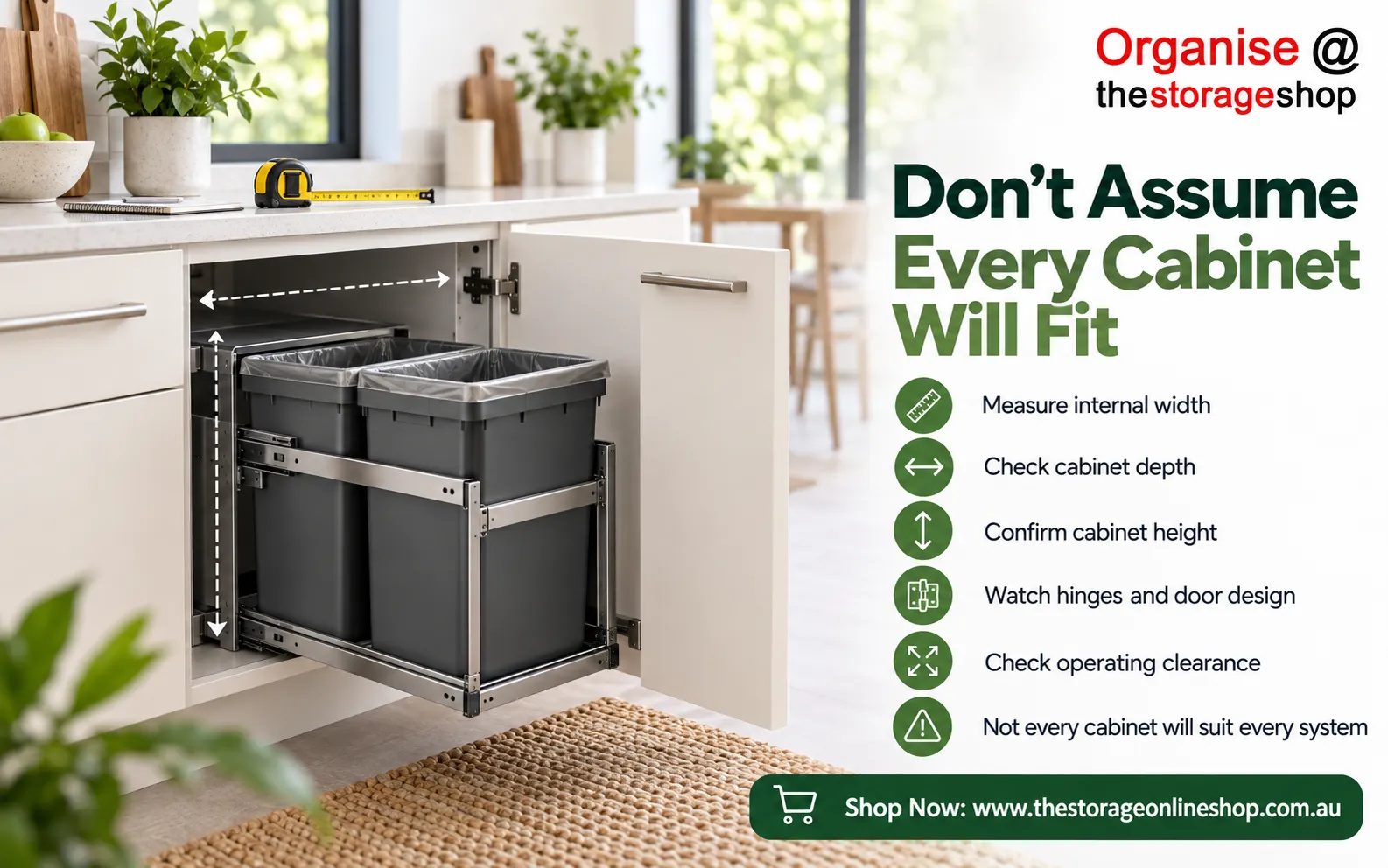
Also determine how the mechanism will operate when the cabinet door is opened. A system that requires more clearance than the cabinet provides may not be suitable.
Capacity Should Reflect Your Household
Kitchen rubbish bins are available in different sizes, and the most suitable capacity depends on how much waste the household produces.
A larger container can reduce the number of liner changes, but it also requires more cabinet space. A smaller container may be easier to handle and can encourage more frequent emptying.
Consider your normal routine rather than selecting capacity simply because a larger number appears more convenient.
What About Multiple Waste Streams?
Many kitchens need to handle more than general rubbish. Recycling, food scraps or other categories may need separate containers depending on the household’s waste practices.
A pull-out cabinet can sometimes provide an organised location for multiple containers if sufficient space is available. This can keep the overall kitchen looking orderly.
However, avoid filling the cabinet so tightly that removing one container requires moving another. Convenience should remain the priority.
Installation Planning Matters
Pull-out storage depends on the relationship between the cabinet, door and sliding hardware. Existing cabinetry should therefore be checked before purchasing.
Look for potential obstacles such as:
-
Cabinet hinges
-
Plumbing
-
Internal shelves
-
Uneven cabinet bases
-
Adjacent doors
-
Narrow openings
-
Limited depth
These factors can affect how the system operates.
Keep the Waste Cabinet Easy to Clean
Waste storage inevitably requires cleaning from time to time. Crumbs, spills and loose packaging can collect around the container, particularly in busy kitchens.
A sensible layout leaves enough access to wipe the cabinet base and surrounding surfaces. Keep spare liners nearby, but avoid turning the same cabinet into a crowded storage area for unrelated products.
A clean, uncluttered waste zone is easier to manage.
Why Choose Us
The Storage Online Shop offers storage-oriented products that can help customers consider more functional approaches to kitchen organisation. For waste storage, the emphasis can be placed on the relationship between cabinet space, accessibility and daily use.
Customers benefit from considering practical requirements before selecting a product. A well-planned waste area should make disposal straightforward while fitting naturally into the kitchen’s existing cabinetry.
About Us
The Storage Online Shop brings together products intended to help people use household storage areas more effectively. Kitchen waste solutions form part of that broader focus on practical organisation.
For customers interested in concealed waste storage, the planning process starts with the cabinet itself. Accurate measurements and a clear understanding of daily usage can make it easier to identify a suitable arrangement.
Turning Hidden Space Into Useful Space
A kitchen cupboard does not have to become a dark corner where waste is difficult to reach. With suitable planning, it can become a dedicated and accessible waste station.
A pull-out system is particularly useful when the goal is to combine concealed storage with easier access. Consider cabinet dimensions, capacity, positioning and cleaning requirements before making a decision, and the result can be a much more functional kitchen waste area.