


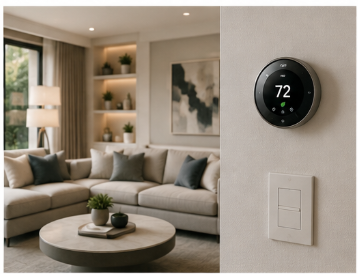
Details rather than expensive renovations often define a polished home. Paint, furniture, and flooring create the main structure, but small visible items can either support the design or interrupt it. A Smart Home Thermostat Cover is one example of the kind of finishing detail homeowners may consider when they want functional technology to sit more comfortably within the room. The same principle applies to lighting controls, charging areas, storage, and other everyday features that are necessary but do not have to dominate the visual space.
Notice the Things You Usually Ignore
Thermostats, switches, cords, routers, and charging cables are easy to overlook because they are practical objects. Yet they are often installed in highly visible places. Once a room is decorated, an awkward device or messy cable arrangement can stand out more than expected.
Start by walking through the space and noticing these small interruptions. Some can be improved simply by organizing cords, repositioning a lamp, or choosing a better place for chargers. Others may benefit from a more attractive surround or cover, provided it does not interfere with how the device works.
Keep Function First
Decorating around smart-home equipment requires care. A thermostat, for example, needs to sense temperature correctly. Any cover or decorative plate should be compatible with the device and installed in a way that does not obstruct vents, sensors, controls, or manufacturer requirements.
The same rule applies to routers, speakers, and other connected devices. Hiding technology completely is not always a good idea. The aim should be visual integration, not reduced performance.
Checking product dimensions and device compatibility before ordering is a simple step that can prevent frustration later.
Build Around a Consistent Finish
Small hardware looks more intentional when finishes are repeated. If a room already uses matte black lighting, black frames, or dark cabinet handles, a similar finish on smaller accessories can help everything feel connected. Warm metallic accents can work the same way.
This approach is useful because it does not require every object to come from the same collection. Repeating a few materials or tones is enough to create consistency. It also gives homeowners a clear filter when they are shopping for new pieces.
Curate Rather Than Collect
People looking for the Best Curated Home Essentials USA are often trying to avoid the clutter that comes from buying unrelated items one at a time. LexxHomes positions its store around home, kitchen, lifestyle, smart-home accents, décor, and storage products selected for modern living.
A curated approach means asking how a product fits with what is already in the room. Does it solve a problem? Does the material relate to other finishes? Will it still look useful six months from now? These questions are more valuable than chasing every new home trend.
Pay Attention to Lighting
Lighting can make small design details look either deliberate or awkward. A harsh ceiling light may exaggerate wires, wall plates, and uneven surfaces, while layered lighting creates a softer visual effect.
Use a combination of ambient, task, and accent lighting where possible. Table lamps and floor lamps can make a room more comfortable while also drawing attention toward art, books, or seating areas. Smart bulbs and dimmers may add convenience, but they should still support the room’s practical needs.
Create a Home for Chargers and Cables
Charging clutter is one of the most common modern-home problems. Phones, watches, tablets, headphones, and laptops all need power, often in the same few rooms.
Instead of allowing cables to spread across countertops, choose one or two charging zones. A drawer, shelf, desk corner, or small organizer can keep devices together. Labeling cables can also help in households where several similar chargers are used.
The improvement is simple, but it can make a kitchen counter, bedside table, or home office look noticeably calmer.
Conclusion
Technology should make a home easier to use, not turn every room into a display of gadgets. Once the necessary devices are integrated, resist the urge to add smart products simply because they exist.
The strongest modern interiors usually combine useful technology with ordinary comfort. A clean charging area, coordinated finishes, well-planned lighting, and carefully selected accessories can create a more polished result than a room filled with connected devices. Small details matter most when they support the way the space is actually used.